ICME 2026Multi-agent movie creation

CineAGICharacter-Consistent Movie Creation through LLM-Orchestrated Multi-Modal Generation and Cross-Scene Integration

Turn a story concept into a coordinated production: recurring characters, connected scenes, and dialogue and music aligned with the picture.

Tianyidan Xie1Mingjie Wang2Qiang Tang3Feixuan Liu4Rui Ma5Lanjun Wang6Zili Yi1,
1Nanjing University2Zhejiang Sci-Tech University3University of British Columbia4Beijing Shuzhimei Technology Co., Ltd5Jilin University6Tianjin University

✉ Corresponding author: Zili Yi

One story. Across the scenes.

Frames from the paper

Story concept

An unexpected reunion

After ten years apart, two childhood friends meet at an airport. A shared taxi ride becomes a chance to reconnect.

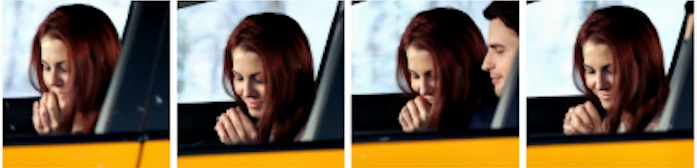
An unexpected reunion, scene 1: an airport arrival. Four original frames from the paper.
Scene 01An airport arrival
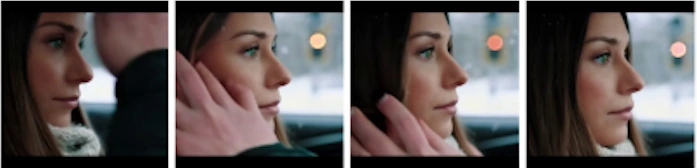
An unexpected reunion, scene 2: in the taxi. Four original frames from the paper.
Scene 02In the taxi
An unexpected reunion, scene 3: a shared ride. Four original frames from the paper.
Scene 03A shared ride
An unexpected reunion, scene 4: a phone call. Four original frames from the paper.
Scene 04A phone call

Story concept

The mysterious music box

A detective receives an old music box from an anonymous sender. Its melody carries a coded message about an unsolved case from her past.

The mysterious music box, scene 1: the music box. Four original frames from the paper.
Scene 01The music box
The mysterious music box, scene 2: a hidden clue. Four original frames from the paper.
Scene 02A hidden clue
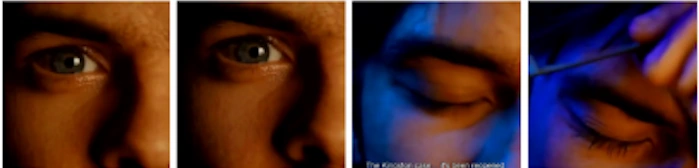
The mysterious music box, scene 3: a closer look. Four original frames from the paper.
Scene 03A closer look
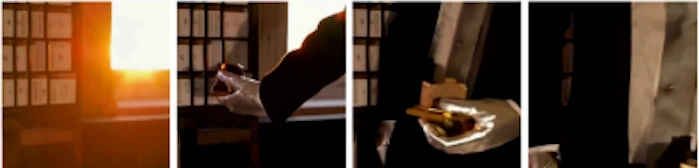
The mysterious music box, scene 4: an unfolding mystery. Four original frames from the paper.
Scene 04An unfolding mystery
+40.0%Overall consistency0.259 vs. 0.185 · Hunyuan
+28.7%Character consistencyHuman rating: 3.14 vs. 2.44
100Story prompts5 genres · 20 prompts per genre

01 / The idea

Keep the cast.
Carry the story.

A movie needs more than a sequence of plausible clips. Characters should remain recognizable, scenes should serve a shared narrative, and dialogue should arrive with the right face and timing.

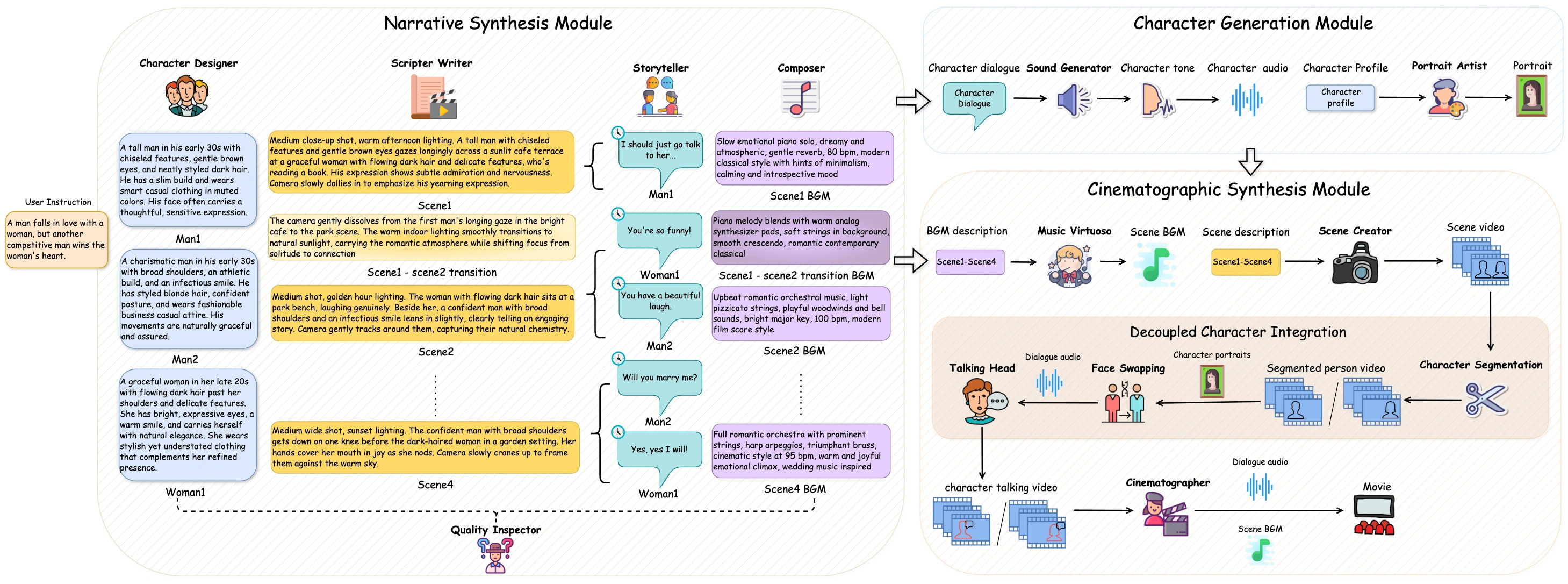
CineAGI organizes production around a shared cinematic blueprint. Specialized LLM agents develop character profiles, scene descriptions, dialogue, and musical direction. A separate integration pipeline then handles each character’s visual identity and speech before the scenes are assembled. The central idea is to coordinate planning, identity, and timing explicitly across the production.

02 / How it works

A coordinated production.

Narrative planning, character assets, and scene synthesis each have a defined role.

01

Write the blueprint

Five specialized agents coordinate character profiles, shooting scripts, dialogue, and music. A Quality Inspector checks their outputs for consistency and returns a structured production plan.

Character profiles + scene specifications

02

Establish the cast

A Portrait Artist creates reference portraits with RealVisXL 3.0. A Sound Generator uses ChatTTS to create character-specific voices and emotionally conditioned dialogue.

Reference portraits + voice assets

03

Produce and assemble

HunyuanVideo generates scenes. Character segmentation, face integration, and lip synchronization preserve each character’s role; MusicGen and final assembly coordinate the soundtrack and picture.

Integrated scenes + synchronized audio

Figure 2 · From story concept to movieEnlarge figure ↗
CineAGI has three modules: five LLM narrative agents plan characters and scenes, character generation produces portraits and dialogue audio, and cinematographic synthesis integrates scenes, faces, lip movements, and music.
Character profiles and scene specifications connect the modules. The final assembly combines processed characters, timed dialogue, subtitles, and background music in narrative order.

Character Designer

Defines appearance, personality, and behavior as shared references.

Script Writer

Specifies framing, camera motion, positioning, and detection cues.

Storyteller

Develops scene progression and dialogue with timing markers.

Composer

Sets musical direction around the story’s emotional progression.

Quality Inspector

Validates the connections between agents and the original concept.

Give each character
their own processing path.

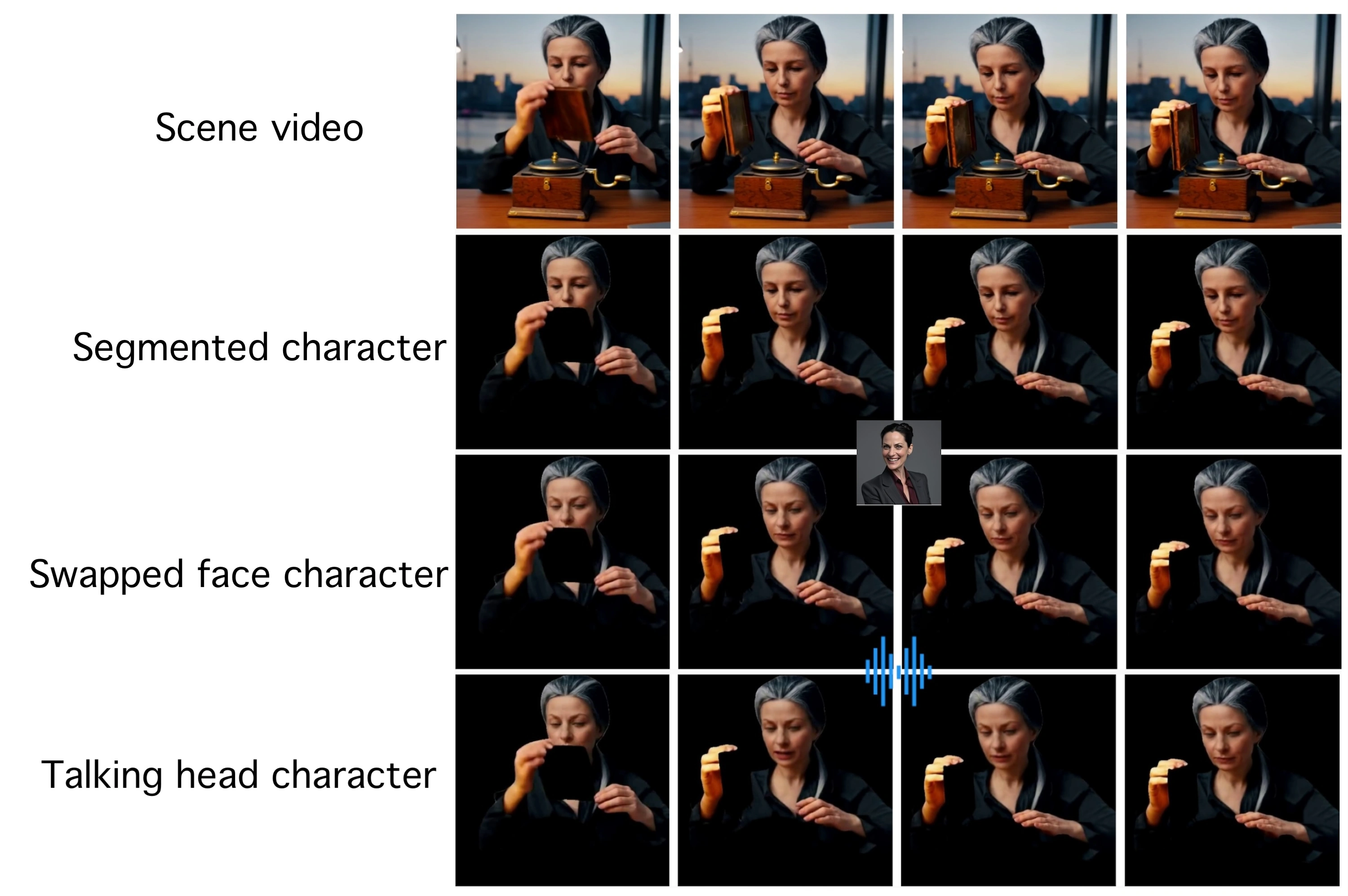
Grounded-SAM2 isolates and tracks character regions. SimSwap applies the character’s reference identity. Wav2Lip aligns lip movements to dialogue. The processed characters are composited back into the scene before audio, subtitles, and music are assembled.

Figure 4 · Decoupled Character IntegrationEnlarge figure ↗
Four stages shown from top to bottom: original scene video, isolated character, reference-guided face integration, and talking-face output aligned with dialogue.
The same scene passes through segmentation, identity integration, and speech synchronization. This is the character-specific processing path ablated in the experiments below.

03 / Experiments

Consistency, evaluated.

Automatic metrics and human ratings measure different aspects of the generated stories.

100 story prompts5 genres512 × 51224 FPS · 129 frames / scene

Narrative and visual consistency

VBench evaluates overall consistency, subject consistency, aesthetic quality, and motion smoothness. Each scene is 5.375 seconds. Baselines are evaluated with both repeated-seed generation and scene descriptions from CineAGI’s Script Writer; scores are averaged across the two strategies.

Scroll sideways to see all metrics →

Main paper, Table 1. Values as reported in the ICME manuscript.
MethodOverall consistency Subject consistency Aesthetic quality Motion smoothness
CogVideoX0.0960.8230.3790.960
VideoCrafter20.0760.8850.3640.920
Hunyuan0.1850.9090.5690.976
CineAGI0.2590.9490.6000.987

All four metrics are better when higher. The paper reports paired tests over 100 prompts against the best baseline: p < 0.01 for overall and subject consistency, and p < 0.05 for aesthetic quality and motion smoothness.

Overall consistency improves from 0.185 to 0.259 over Hunyuan (+40.0% relative). Subject consistency increases from 0.909 to 0.949 (+4.4% relative).

How people experience the stories

Twenty participants, including ten with professional multimedia experience, rated five aspects of the videos on a 1–5 Likert scale.

Scroll sideways to see all metrics →

Main paper, Table 2. Values as reported in the ICME manuscript.
MethodVisual quality Narrative coherence Character consistency Audio coherence Overall quality
CogVideoX3.162.522.212.63
VideoCrafter22.752.261.982.45
Hunyuan3.522.912.442.88
CineAGI3.833.573.143.263.37

Higher is better. A dash under audio coherence means that the baseline does not support the evaluated audio feature; it is not assigned a zero score.

Character consistency increases from 2.44 to 3.14 / 5 over Hunyuan (+28.7% relative). Narrative coherence increases from 2.91 to 3.57.

Planning and integration both contribute

Each ablation removes one part of the framework: narrative synthesis, the Quality Inspector, or Decoupled Character Integration.

Scroll sideways to see all metrics →

Main paper, Table 3. Values as reported in the ICME manuscript.
MethodOverall consistency Subject consistency Aesthetic quality Motion smoothness
Without narrative synthesis0.2320.9240.5750.974
Without quality inspector0.2450.9380.5700.982
Without character integration0.2060.9110.5830.971
Full CineAGI0.2590.9490.6000.987

These are automatic metrics from the main paper’s ablation table; higher is better throughout.

Removing character integration reduces overall consistency from 0.259 to 0.206 and subject consistency from 0.949 to 0.911—the largest drops among these three variants.


Reported resultsCSV ↓JSON ↓
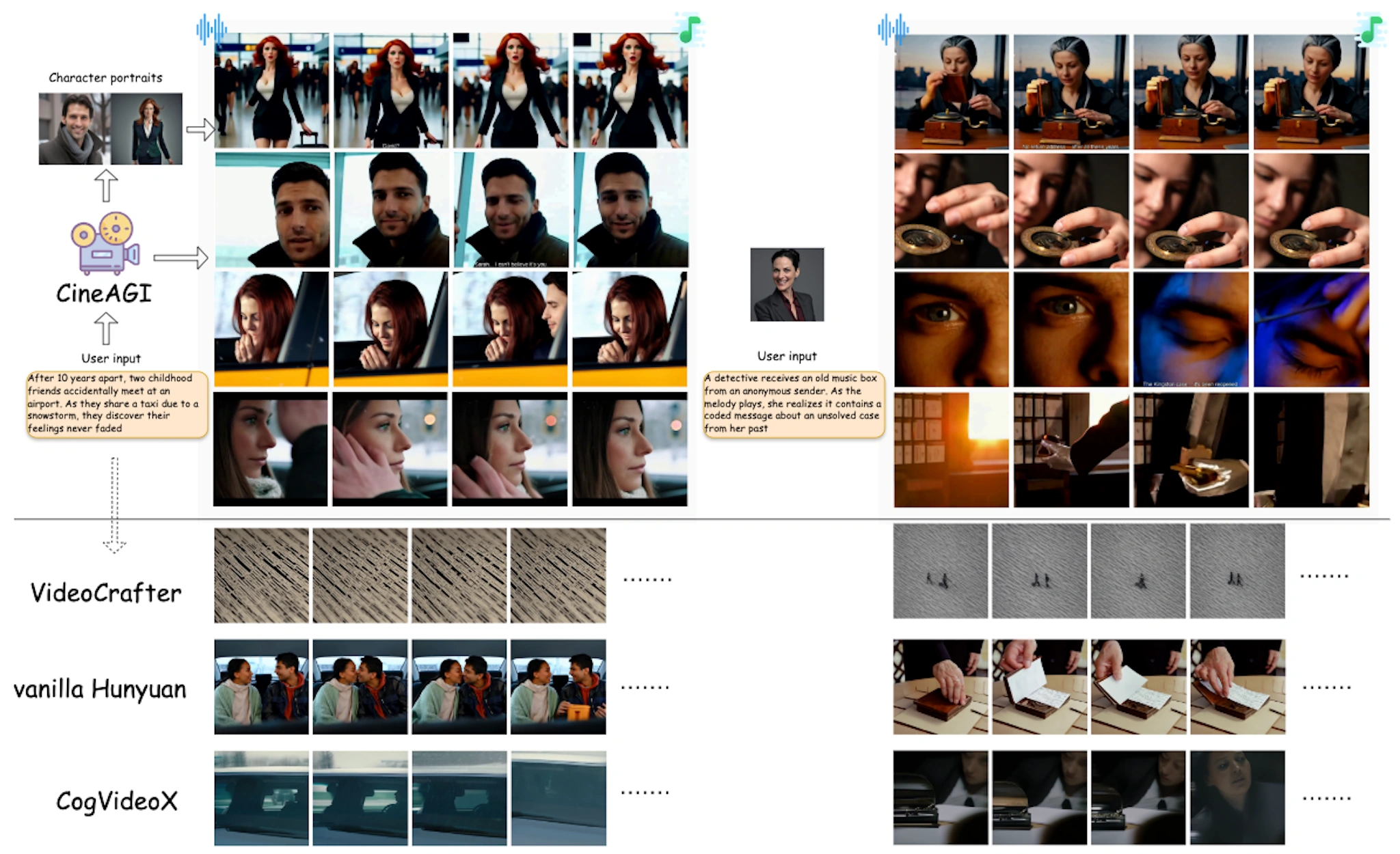
Figure 3 · Qualitative comparisonEnlarge figure ↗
Original CineAGI qualitative comparison for a reunion story and a music-box mystery, showing reference portraits, four generated scenes per story, and baseline samples.
The upper portion presents CineAGI’s scene sequences and story inputs; the lower rows show VideoCrafter, vanilla Hunyuan, and CogVideoX. The full original figure is available for inspection.

04 / Beyond the headline

Different genres.
A shared pipeline.

The appendix reports genre-level scores, agent ablations, coordination settings, and production cost.

Character consistency across genres.

Each genre includes 20 prompts. Subject consistency ranges from 0.941 to 0.956 across the five evaluated genres.

Appendix E · Higher is better
GenreOverall
consistency
Subject
consistency
Romantic comedy0.2670.953
Action0.2450.941
Drama0.2710.956
Family drama0.2530.947
Suspense thriller0.2590.948

Production cost, component by component.

A 5.375-second scene requires approximately 11.3 minutes on one NVIDIA A100 in the reported setting. Scene generation accounts for the largest share.

Appendix E · Minutes per scene
ComponentTime
Narrative synthesis2.8 min
Character generation0.5 min
Scene creation6.3 min
Character integration1.2 min
Final assembly0.5 min
Limitations and open directions
  • Nuanced storytelling and sophisticated character development remain challenging relative to human screenwriting.
  • Consistency in feature-length productions and across strong emotional transitions requires further investigation.
  • Advanced camera work and artistic composition are constrained by the underlying synthesis and integration components.
  • The pipeline is computationally intensive, which limits interactive editing and long-form production at scale.

05 / Reference

Cite CineAGI.

Accepted to ICME 2026. Use the arXiv citation below for this preprint; the paper and appendix above contain the full method and evaluation.

@misc{xie2026cineagi,
  title = {CineAGI: Character-Consistent Movie Creation through LLM-Orchestrated Multi-Modal Generation and Cross-Scene Integration},
  author = {Xie, Tianyidan and Wang, Mingjie and Tang, Qiang and Liu, Feixuan and Ma, Rui and Wang, Lanjun and Yi, Zili},
  year = {2026},
  eprint = {2604.23579},
  archivePrefix = {arXiv},
  primaryClass = {cs.MM},
  url = {https://arxiv.org/abs/2604.23579}
}

Paper figure